


Straight and curved/folded baffles each have their unique applications and advantages in industrial belt conveyor systems. Here are the main differences:
1. Shape and Structure:
Straight Baffles: As the name suggests, these baffles are flat and are typically installed along the edge of the belt or at specific locations to form a vertical or slightly inclined barrier.
Curved/Folded Baffles: These baffles may have curved shapes or folded designs to accommodate the conveyor requirements of belts on bends, inclines, or special paths. They guide material more effectively and prevent spillage.
2. Application Scenarios:
Straight Baffles: Commonly used in straight conveyor paths or where the belt has a large turning radius. They are suitable for most standard conveyor tasks, especially when material is unlikely to spill or requires simple guidance.
Curved/Folded Baffles: Particularly suitable for applications where the belt needs to frequently bend, ascend or descend slopes, or traverse complex paths. These baffles better adapt to the dynamic movement of the belt, ensuring that material remains on the belt during transport.
3. Material Control:
Straight-plate baffles: Provide basic material control, preventing material from falling off the belt edge.
Curved or folded baffles: Offer more advanced material control in turning or inclined areas through a closer fit and guidance, reducing material loss.
4. Installation and Maintenance:
Straight-plate baffles: Generally easier to install and maintain due to their simpler design.
Curved or folded baffles: May require more complex installation procedures and periodic adjustments to ensure their effectiveness under different movement conditions.
5. Cost:
Straight-plate baffles: Generally lower manufacturing costs due to their simpler design.
Curved or folded baffles: Costs may be correspondingly higher due to their more complex design and manufacturing process.
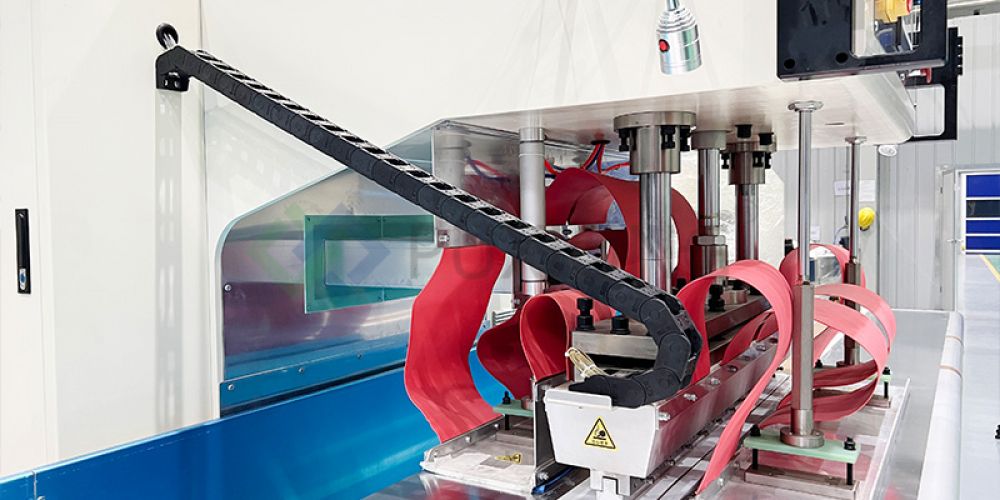
High-frequency welding technology is a key process in tent manufacturing. It achieves precise welding of plastic…
.png)
High-frequency welding and hot air welding for tents differ significantly in principle, applicability, efficiency, and finished…

I. Fuel Tanks Revolutionize Energy Transportation 1. Flexible Transportation, Overcoming Spatial Limitations Traditional energy transportation methods…
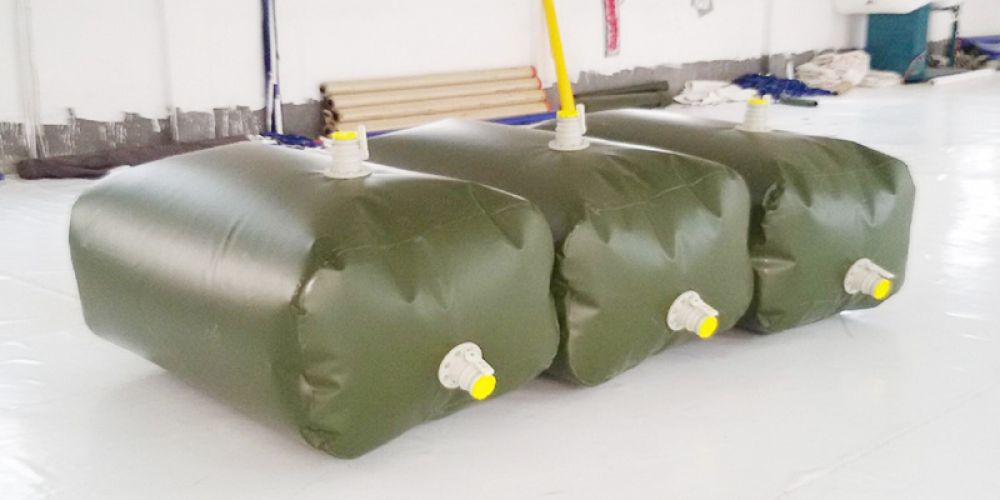
I. Principle of High-Frequency Welding of Oil Bladders High-frequency welding utilizes the skin effect and proximity…

Fuel bladders provide a solid defense for energy transportation safety, primarily due to their material properties…

Oil bladders, acting as the "invisible guardians" behind energy transportation, exhibit unique advantages in materials, design…