

.png)
High-frequency welding and hot air welding for tents differ significantly in principle, applicability, efficiency, and finished product quality. High-frequency welding offers advantages in efficiency, strength, and environmental friendliness, while hot air welding is suitable for thicker materials and specific scenarios. The following is a detailed comparative analysis:
I. Welding Principles
1. High-Frequency Welding: High-frequency welding relies on converting electrical energy into heat energy to generate sufficient heat within the workpiece to melt it, thus achieving welding. For non-conductive materials such as air, oil, and PVC, the plastic dielectric material to be welded is sandwiched between two conductors, called electrodes. When high-frequency electrical energy is transferred between these electrodes, an alternating electric field is generated in the dielectric material. This alternating electric field causes the molecules of the dielectric material to move violently, resulting in heating.
2. Hot Air Welding: In hot air welding, heat is controlled. Heated air is delivered to the area of the workpiece to be welded, and the required pressure is applied by a pressure roller. A key feature of this process is that a hot wedge is directly heated through a heating tube, and the generated heat is directly transferred to the area of the workpiece to be welded through the hot wedge.
II. Applicability
1. High-Frequency Welding: High-frequency welding technology overcomes the problems that may arise when using direct heating alone and allows for the welding of plastic materials under controlled conditions. It is suitable for dielectric materials such as PVC, ensuring tight welding between tent fabrics in tent manufacturing, forming strong welds without damaging the material's outer surface.
2. Hot Air Welding: Hot air welding is particularly suitable for welding thicker materials. Currently, it is most widely used in the production of rigid polyvinyl chloride (RPVC) extruded profiles and laminates. For tent manufacturing, if the tent fabric is thick, hot air welding may be a suitable choice.
III. Welding Efficiency and Strength
1. High-Frequency Welding: High-frequency welding machines weld tents more firmly than hot presses and are faster, completing the weld in seconds. High-frequency welding heats and rapidly melts the material from within, without requiring third-party welding aids.
2. Hot Air Welding: While hot air welding can also weld tent fabrics, its welding speed may be slower than high-frequency welding, and it requires auxiliary materials such as welding rods.
.jpg)
The applications of PVDF membrane materials—involving processes such as coating, sanding, and welding—in the environmental protection…
.jpg)
I. Advantages of Grinding and Welding PVDF-Coated Membrane Fabric 1. Improved Weldability: Grinding removes the surface…
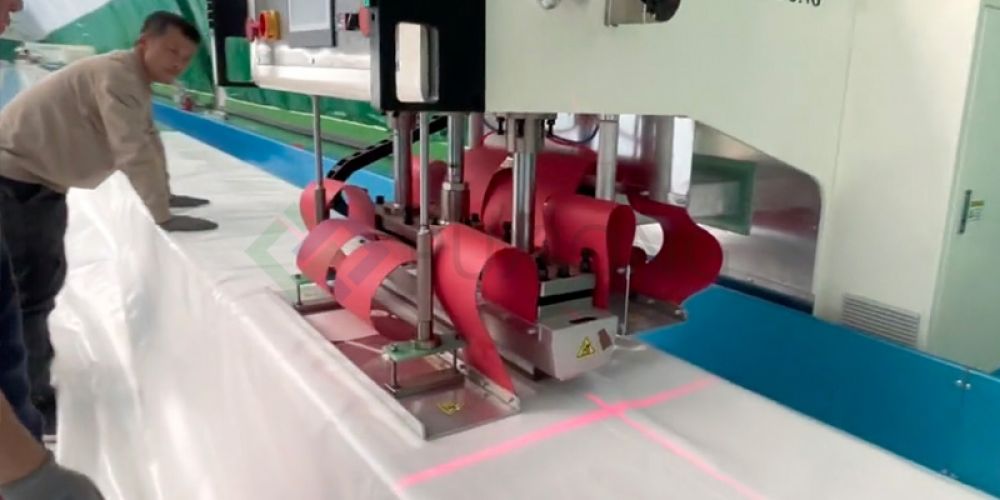
In the field of modern architecture, the construction of large-scale venues requires not only meeting functional…
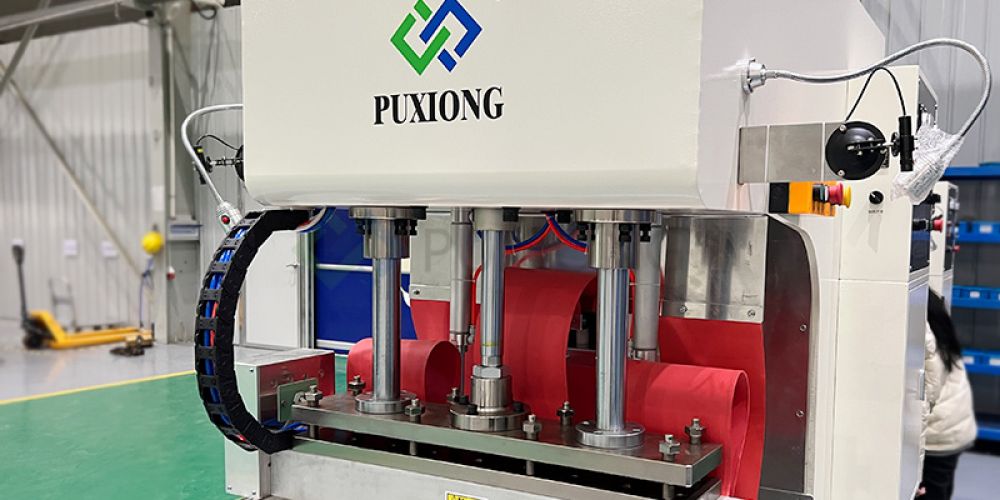
The advantages of high-frequency welding for tensile membrane structures primarily include the following aspects: 1. **Simple…
.jpg)
Welded tensile membrane structures are widely used in landscape architecture and offer significant advantages. The following…

Gas storage bags play a vital role in industrial production by storing gases, regulating pressure, enhancing…