

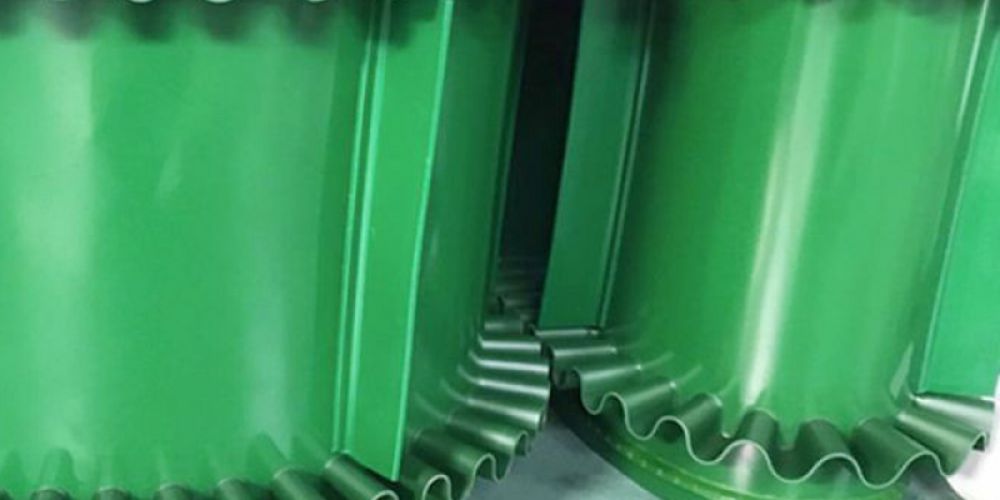
The sidewall design of sidewall-cleated conveyor belts enhances conveying efficiency in several ways:
1. **Increased Material Adhesion:** The sidewall design improves the grip between the material and the belt, ensuring the material adheres securely. This minimizes slippage and spillage, thereby boosting conveying efficiency.
2. **Reduced Material Accumulation:** During transport, materials can easily pile up or scatter on the belt, hindering efficiency. Sidewalls effectively prevent such accumulation and spillage, keeping the belt surface clean and level, which improves overall efficiency.
3. **Directional Conveying:** By adjusting the inclination angle of the sidewalls, materials can be guided to move in a specific, preset direction. This prevents material crossing or interference, leading to higher conveying efficiency.
4. **Reduced Blockages and Downtime:** The sidewall design prevents large chunks of material or debris from becoming jammed, thereby reducing belt blockages and associated downtime, which improves conveying efficiency.
5. **Enhanced Belt Stability:** Sidewalls stabilize the belt, minimizing vibration and misalignment. This reduces material loss and waste during transport, thereby increasing conveying efficiency.
By enhancing material adhesion, minimizing accumulation, enabling directional conveying, reducing blockages and downtime, and improving belt stability, the sidewall design of these belts boosts efficiency, lowers costs, and ensures stable, reliable production.
How is directional conveying achieved with sidewall-cleated conveyor belts? Directional conveying is achieved by adjusting the inclination angle of the sidewalls. Specifically, when material needs to be moved in a particular direction, one side of the sidewall can be set to an appropriate angle; this exerts a directional pushing force on the material, facilitating controlled, directional transport.
Additionally, parameters such as sidewall length, inclination angle, and height can be adjusted based on factors like material shape, particle size, and mass to optimize directional conveying performance. Additionally, to achieve optimal directional conveying results, the following points should be considered:
1. Ensure the conveyor belt remains flat and stable: Maintain the flatness and stability of the belt during operation, preventing issues such as vibration, misalignment, or twisting to ensure the directional flow of materials.
2. Control material flow rate and speed: Regulate the flow rate and speed of the materials based on actual conditions, preventing accumulation or slippage on the belt to ensure consistent directional transport.
3. Perform timely cleaning and maintenance: Regularly clean and maintain the conveyor belt, promptly removing debris and addressing worn sections to keep the belt in good condition, thereby ensuring proper operation and effective directional conveying.
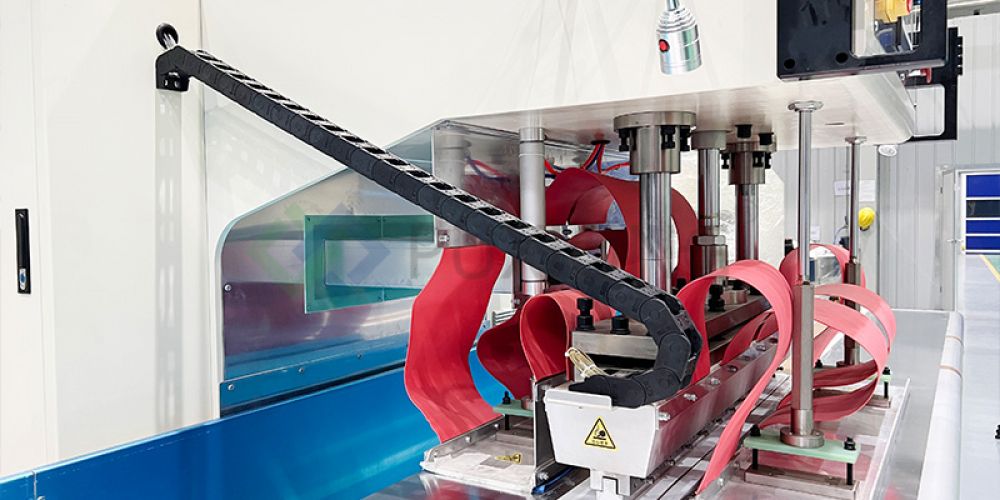
High-frequency welding technology is a key process in tent manufacturing. It achieves precise welding of plastic…
.png)
High-frequency welding and hot air welding for tents differ significantly in principle, applicability, efficiency, and finished…
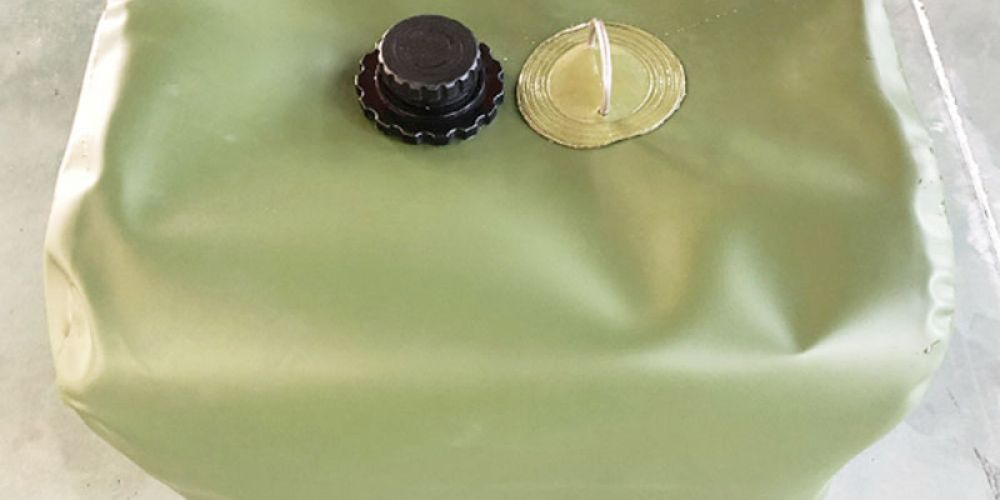
I. Fuel Tanks Revolutionize Energy Transportation 1. Flexible Transportation, Overcoming Spatial Limitations Traditional energy transportation methods…
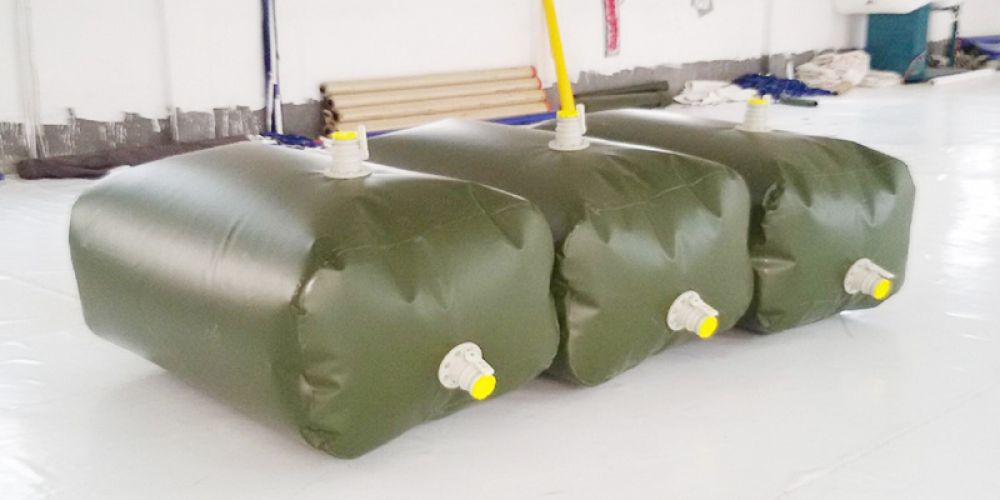
I. Principle of High-Frequency Welding of Oil Bladders High-frequency welding utilizes the skin effect and proximity…
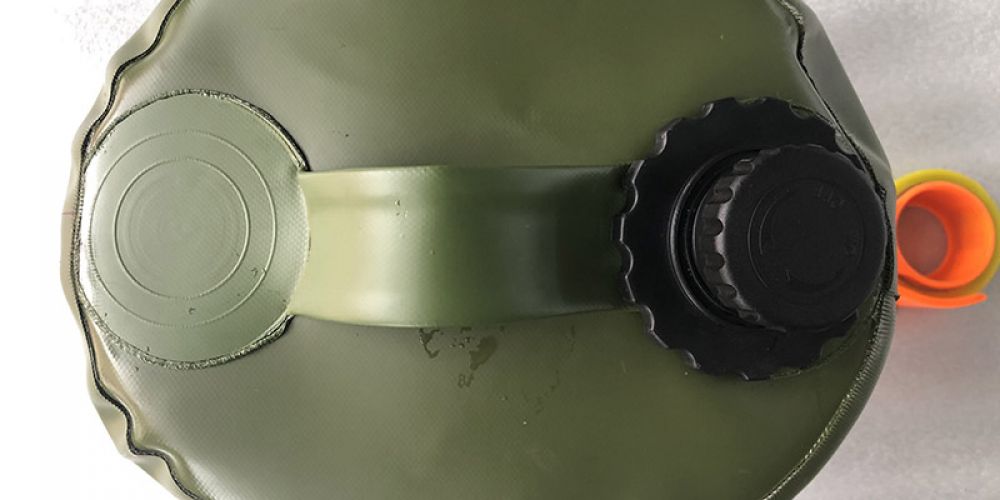
Fuel bladders provide a solid defense for energy transportation safety, primarily due to their material properties…
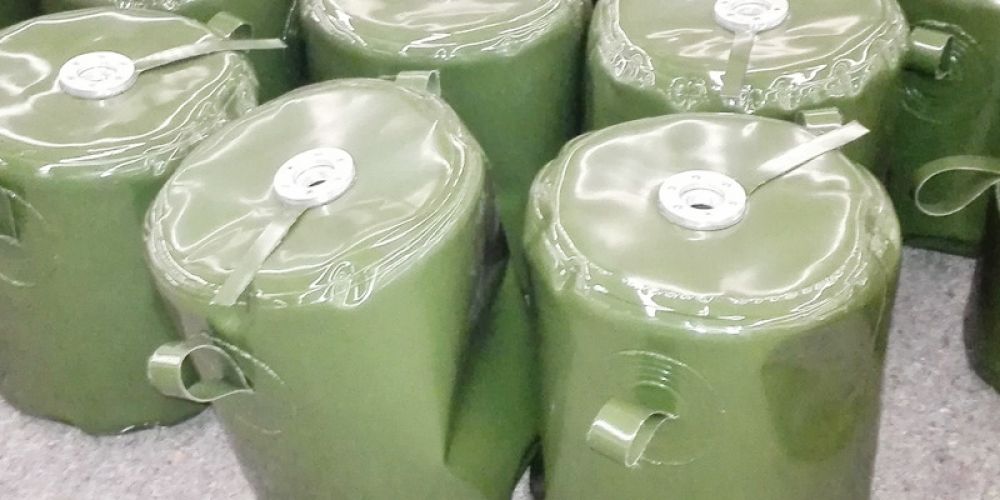
Oil bladders, acting as the "invisible guardians" behind energy transportation, exhibit unique advantages in materials, design…