

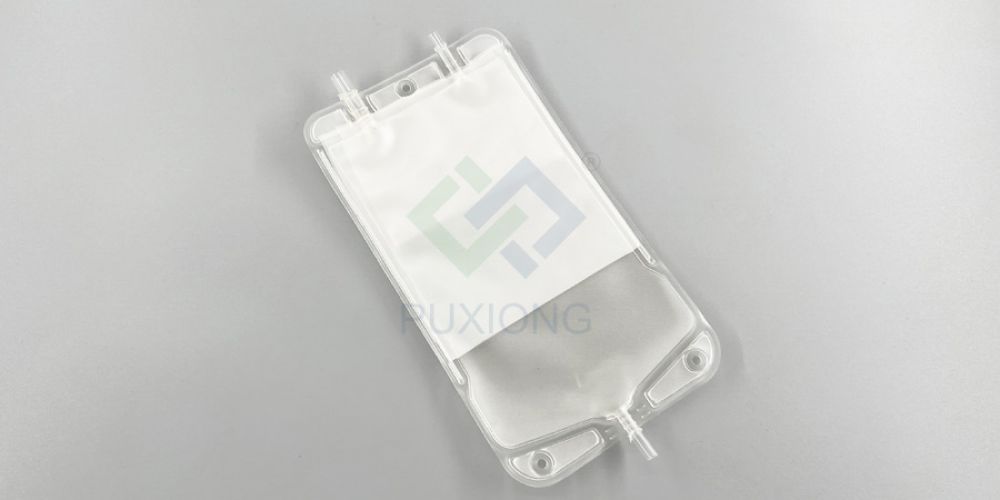
In the nutrition bag industry, high-frequency welding and traditional heat sealing (such as hot plate heat sealing, pulse heat sealing, and ultrasonic heat sealing) each have their unique application scenarios and advantages and disadvantages. High-frequency welding is more suitable for the production of nutrition bags with high precision, high strength, and complex structures, while traditional heat sealing is more suitable for the production of conventional nutrition bags with simple structures and sensitive cost. The following analysis will focus on two dimensions: technical principles and application scenarios.
I. Comparison of Technical Principles
1. High-Frequency Welding
High-frequency welding utilizes a vacuum tube self-excited oscillator to generate a high-frequency electric field (typically 50–80 MHz, 20–45 MHz for PVC film), causing the plastic molecules to generate heat and apply pressure to achieve heat sealing. Its core principle is: under the action of a high-frequency electric field, the polar molecules of the plastic film align in the opposite direction to the electrodes, with positive charges moving to the negative pole and negative charges moving to the positive pole, achieving fusion through molecular friction and heat generation. High-frequency welding machines typically consist of three parts: high-frequency oscillation, mechanical transmission, and electrical control. They are suitable for thicker plastic materials or scenarios requiring high processing precision and strength.
2. Traditional Heat Sealing Technologies
Hot Plate Heat Sealing: Relies on external heating (such as a heated metal plate) to melt the surfaces of two overlapping film layers, bonding them under pressure and then cooling to solidify. It has a simple structure and low cost, but lower temperature control precision, easily leading to deformation or poor sealing of the welded joints.
Pulse Heat Sealing: Uses a nickel-chromium strip or an electrically heated quartz tube to instantaneously heat the film, causing it to melt under pressure and then cool. Suitable for applications requiring high heat sealing speed, but the equipment cost is high.
Ultrasonic Heat Sealing: Uses a transducer to convert high-frequency current into mechanical vibration, transferring mechanical energy to the film through a vibrating head, causing it to soften, melt, and bond. It has advantages such as speed, no chemical residue, and suitability for multi-layer composite materials, but the equipment cost is high and its adaptability to materials is limited.
II. Application Scenarios Comparison
1. Application Scenarios of High-Frequency Welding
High Precision and High Strength Requirements: High-frequency welding allows for precise control of welding parameters (such as frequency, voltage, and pressure), making it suitable for the production of nutritional bags requiring high sealing and strength, such as vacuum-packed meat and dairy products, which have extremely high preservation requirements.
Complex Structure Welding: High-frequency welding can achieve complex contour welding of irregularly shaped bags (such as stand-up pouches and polygonal bags), producing strong and aesthetically pleasing weld joints, suitable for customized production of high-end nutrition bags.
Multi-layer Composite Material Welding: High-frequency welding can penetrate multiple layers of composite materials, achieving a strong bond between each layer, meeting the comprehensive requirements of nutrition bags for barrier properties, light protection, and moisture resistance.
2. Application Scenarios of Traditional Heat Sealing
Conventional Nutrition Bag Production: Hot plate heat sealing is widely used for sealing flexible packaging such as polyethylene (PE) bags due to its low cost and simple operation, such as snack bags in supermarkets and cling film used daily.
High-Speed Production Line: Pulse heat sealing and ultrasonic heat sealing have short welding cycles (less than 1 second), are compatible with Industry 4.0 intelligent requirements, and are suitable for large-scale production of conventional nutrition bags.
Special Material Welding: Ultrasonic heat sealing is suitable for welding multi-layer composite materials (such as aluminum-plastic film), ensuring airtightness and moisture resistance, but the equipment cost is higher, making it more suitable for food packaging with extremely high hygiene requirements (such as snack bags, retort pouches, and liquid packaging).
.jpg)
Welded tensile membrane structures are widely used in landscape architecture and offer significant advantages. The following…

Gas storage bags play a vital role in industrial production by storing gases, regulating pressure, enhancing…
The welding process for PVDF-coated membrane fabrics offers significant competitive advantages over other welding methods, particularly…

I. Application Scenarios for Tensile Membrane Structures Due to their unique mechanical properties and aesthetic versatility…
I. Characteristics of Tensile Membrane Structures 1. Diverse forms and strong artistic appeal: Through the tensioning…
Significant breakthroughs have been achieved in the research and development of new materials for gas storage…