

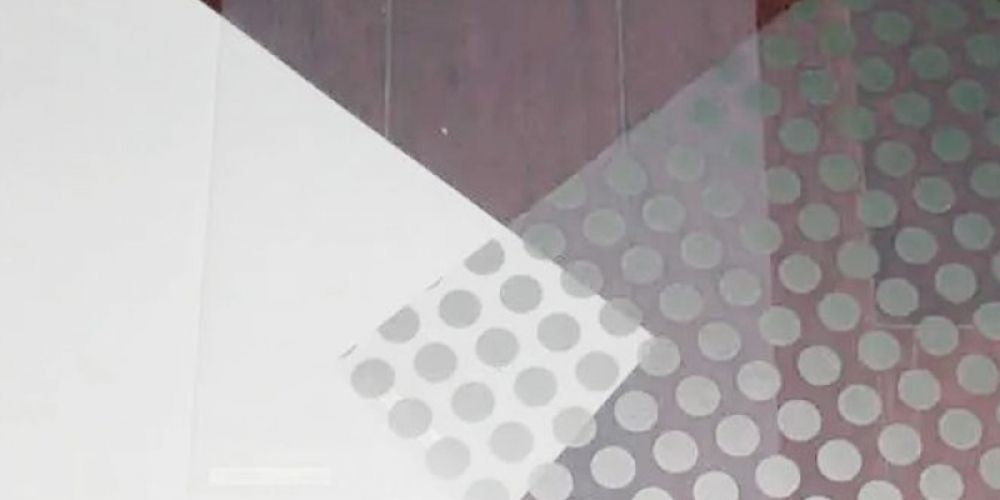
I. Introduction
With the rapid development of fields such as architectural membrane structures, water treatment, and aerospace, ETFE/PTFE composite membrane materials have emerged as ideal choices due to their excellent light transmission, weather resistance, chemical corrosion resistance, and high strength. However, significant differences in physical properties and heat-sealing parameters between ETFE and PTFE materials often lead to issues such as insufficient bond strength and thermal damage during the lamination and heat-sealing process. Therefore, researching novel lamination and heat-sealing processes to enhance interlayer bond strength and overall sealing quality holds significant engineering importance.
II. Analysis of Technical Challenges in Lamination and Heat Sealing
1. Differences in Material Properties
ETFE membranes feature a dense, non-porous structure with high light transmission and good chemical resistance, but they have a relatively narrow heat-sealing temperature range. PTFE membranes possess a porous structure and exhibit exceptional high-temperature and chemical resistance; however, they are difficult to heat-seal and require specialized processes and equipment.
2. Control of Heat-Sealing Process Parameters
Heat-sealing temperature: The sealing temperature range for ETFE is 290–340°C, whereas PTFE typically requires temperatures above 340°C.
Pressure and time: ETFE requires a pressure of approximately 10 N and a sealing speed of 10–15 cm/min; PTFE requires higher pressure and longer processing times.
Temperature uniformity: Non-uniform temperature distribution during the heat-sealing process can easily lead to thermal damage or inadequate bond strength.
3. Interlayer bond strength issues: In traditional processes, direct high-temperature and high-pressure sealing often causes thermal damage and reduces bond strength. Significant differences in the coefficients of thermal expansion between the materials can generate internal stresses during sealing, thereby compromising bond quality.
III. Novel Process Scheme
1. Process Principles
Graduated heating: A staged heating approach allows the materials to gradually adapt to the sealing temperature, thereby minimizing thermal damage.
Intermittent pressurization: Applying pressure at appropriate intervals during the heating phase helps relieve internal stresses and enhances bond strength.
2. Process Parameter Settings
Initial temperature: Set to the lower limit of the heat-sealing temperature range for ETFE and PTFE to prevent thermal damage.
Heating rate: Determined based on material properties to ensure temperature uniformity. Intermittent pressurization frequency and pressure levels: Optimized based on experimental results to ensure bond strength and material integrity.
3. Process advantages: Enhances interlaminar bond strength and reduces heat-sealing defects; minimizes thermal damage to materials, thereby extending the service life of the composite film; accommodates varying material properties, enhancing process versatility.
In the field of modern architecture, the construction of large-scale venues requires not only meeting functional…
The advantages of high-frequency welding for tensile membrane structures primarily include the following aspects: 1. **Simple…
.jpg)
Welded tensile membrane structures are widely used in landscape architecture and offer significant advantages. The following…

Gas storage bags play a vital role in industrial production by storing gases, regulating pressure, enhancing…
The welding process for PVDF-coated membrane fabrics offers significant competitive advantages over other welding methods, particularly…

I. Application Scenarios for Tensile Membrane Structures Due to their unique mechanical properties and aesthetic versatility…