

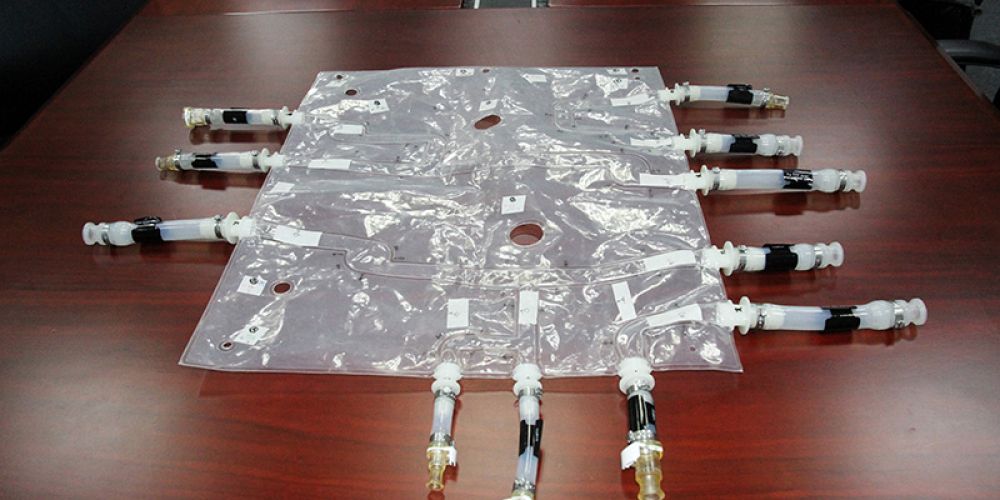
To maintain stable performance of drainage bags during cold chain transportation, key considerations include material selection, structural design, and usage specifications. The following is a detailed analysis:
I. Material Selection
Drainage bags are generally made of medical-grade polymer materials (such as PE/polyethylene). This material possesses a certain degree of flexibility and low-temperature resistance, enabling it to withstand the effects of low temperatures and prevent breakage due to material brittleness.
II. Structural Design
1. Support Structure: The drainage bag body can be designed with an upper plate, a lower plate, and a transparent film layer. The upper and lower plates are made of rigid plastic to provide support and prevent deformation under pressure. Even when subjected to external pressure during cold chain transportation, the bag maintains its integrity.
2. Leak-proof Design: Both the drainage tube and the discharge tube on the drainage bag body are equipped with on/off valves to effectively prevent liquid leakage. During cold chain transportation, due to the low temperature, the liquid may become more viscous or solidify. The on/off valve design ensures that the drainage bag will not leak due to changes in liquid state during transportation.
3. Transparent Observation: Both the front and back of the drainage bag are made of transparent material with graduated lines, allowing medical staff to easily observe the color, volume, and properties of the drainage fluid. Even in low-temperature environments, the transparent material maintains good clarity, facilitating real-time monitoring.
III. Usage Guidelines
1. Fixing Method: The drainage bag has a notch and snap fasteners. It is installed on the bed railing through the notch and securely connected using the snap fasteners. During cold chain transportation, the drainage bag can be fixed in a suitable position within the transport container to prevent damage due to shaking.
2. Regular Inspection: During cold chain transportation, the drainage bag should be regularly inspected for leaks and the tightness of the connections. If any damage or leakage is found, the drainage bag should be replaced immediately.
.jpg)
Welded tensile membrane structures are widely used in landscape architecture and offer significant advantages. The following…

Gas storage bags play a vital role in industrial production by storing gases, regulating pressure, enhancing…
The welding process for PVDF-coated membrane fabrics offers significant competitive advantages over other welding methods, particularly…

I. Application Scenarios for Tensile Membrane Structures Due to their unique mechanical properties and aesthetic versatility…
I. Characteristics of Tensile Membrane Structures 1. Diverse forms and strong artistic appeal: Through the tensioning…
Significant breakthroughs have been achieved in the research and development of new materials for gas storage…