

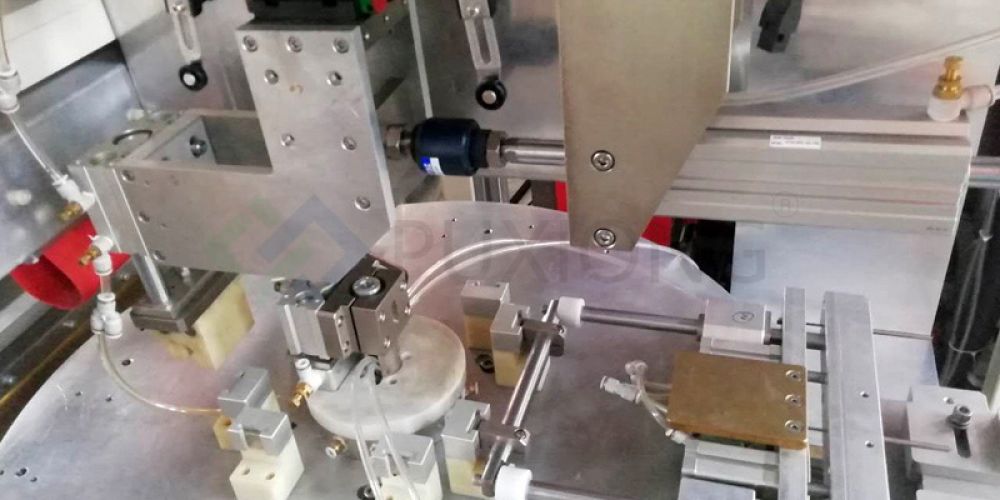
High-frequency welding technology for drainage bags offers significant advantages in the medical device field, with its highly efficient sealing characteristics being particularly prominent. These advantages are reflected in the following aspects:
1. Efficient Sealing, Prevents Leakage
High-frequency welding technology generates eddy currents within the plastic material through a high-frequency electromagnetic field, rapidly converting electrical energy into thermal energy. This causes the material to melt at the contact points, forming a strong welded joint. This welding method ensures the sealing integrity of the welded area, effectively preventing liquid leakage and meeting the stringent sealing requirements of medical devices such as drainage bags.
2. High Welding Strength, Excellent Durability
The joints formed by high-frequency welding exhibit high strength and superior resistance to pulling, enabling them to withstand various stresses encountered during the transportation and use of drainage bags. This extends the product’s service life, which is particularly important for medical devices requiring long-term use, ensuring reliability and safety.
3. Rapid Heating, High Production Efficiency
High-frequency welding technology features fast heating speeds, allowing the welding process to be completed in a short time and thereby improving production efficiency. Additionally, this technology is well-suited for large-scale production, meeting the high-efficiency demands of the medical device industry.
4. Strong Material Adaptability
High-frequency welding technology is highly compatible with various plastic materials, including PVC and TPU, which are commonly used in medical devices. This makes the technology widely applicable to the production of drainage bags made from different materials, catering to diverse market needs.
5. Eco-Friendly and Pollution-Free
The high-frequency welding process does not require adhesives or other chemicals, avoiding the release of harmful substances and aligning with the environmental requirements for medical products. This is of great significance in safeguarding the health of patients and healthcare workers.
.jpg)
Welded tensile membrane structures are widely used in landscape architecture and offer significant advantages. The following…

Gas storage bags play a vital role in industrial production by storing gases, regulating pressure, enhancing…
The welding process for PVDF-coated membrane fabrics offers significant competitive advantages over other welding methods, particularly…

I. Application Scenarios for Tensile Membrane Structures Due to their unique mechanical properties and aesthetic versatility…
I. Characteristics of Tensile Membrane Structures 1. Diverse forms and strong artistic appeal: Through the tensioning…
Significant breakthroughs have been achieved in the research and development of new materials for gas storage…