

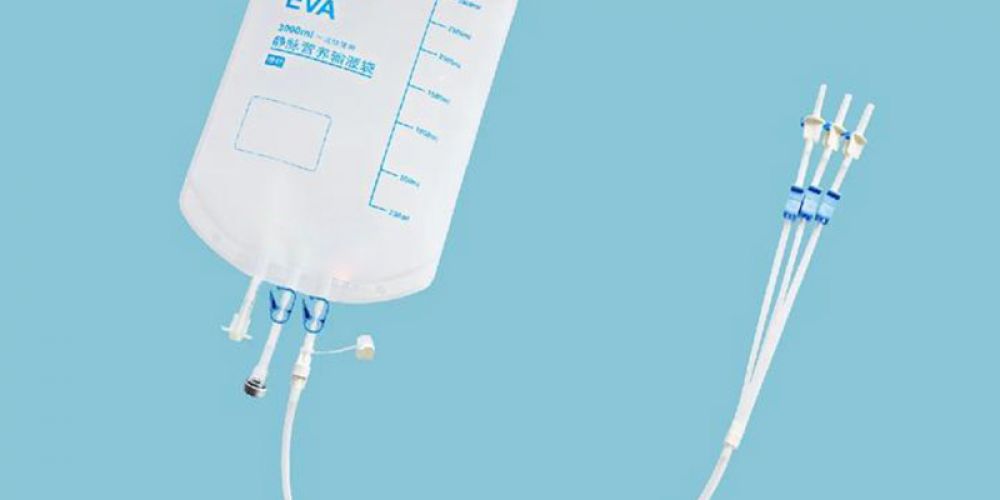
I. Core Advantages of High-Frequency Welding
1. High Efficiency and Speed, Suitable for Mass Production
Welding Speed: High-frequency welding can be completed within seconds, with welding speeds reaching 150-200 m/min, significantly higher than traditional heat sealing.
Application Scenarios: In the production of nutritional bags, high-frequency welding can quickly seal multi-layer composite materials, such as nutritional bags made of aluminum-plastic composite film, meeting the needs of high-speed production lines.
2. High Sealing Performance, Ensuring Product Quality
Sealing Principle: High-frequency welding generates heat through molecular friction, causing the contact interface to melt uniformly, forming a flawless weld, ensuring waterproof, dustproof, and leak-proof performance.
Data Support: High-frequency welding has a narrow heat-affected zone (typically less than 1 mm), high weld strength, and can withstand high-pressure testing, making it suitable for the production of nutritional bags in liquid or high-humidity environments.
3. Wide Material Adaptability, Supporting Multi-Layer Composites
Applicable Materials: High-frequency welding is highly effective on polar plastics (such as PVC, PET, and nylon), and is especially suitable for welding multi-layer composite materials (such as PE/AL/NY).
Case Study: Nutritional bags often need to block oxygen and water vapor. High-frequency welding can penetrate the aluminum foil layer, achieving a strong bond between layers and extending shelf life.
4. Clean and Environmentally Friendly, Meeting Food Hygiene Standards
No Chemical Residue: High-frequency welding requires no glue or solvents, avoiding the risk of chemical migration and meeting FDA and other food contact material safety requirements.
Low Emissions: The welding process produces no smoke or harmful gases, making it suitable for cleanroom production.
5. Great Potential for Automation Integration
Equipment Compatibility: High-frequency welding machines are easily integrated with robots and vision inspection systems, achieving full-process automation and reducing manual intervention.
II. Limitations of High-Frequency Welding
1. Limited Material Selection
Unsuitable for Non-Polar Plastics: High-frequency welding is ineffective for non-polar plastics such as PE and PP. Polar/non-polar composite materials must be prepared through co-extrusion, increasing costs.
Solution: Some companies use a combination of high-frequency welding and ultrasonic welding to accommodate different material requirements.
2. High Equipment Investment and Maintenance Costs
Equipment Price: High-frequency welding machines are more expensive than traditional heat-sealing equipment and require matching high-frequency power supplies, molds, etc., resulting in a significant initial investment.
Maintenance Requirements: High-frequency welding demands high precision in electrode cleaning and mold operation, requiring regular maintenance.
.jpg)
Welded tensile membrane structures are widely used in landscape architecture and offer significant advantages. The following…

Gas storage bags play a vital role in industrial production by storing gases, regulating pressure, enhancing…
The welding process for PVDF-coated membrane fabrics offers significant competitive advantages over other welding methods, particularly…

I. Application Scenarios for Tensile Membrane Structures Due to their unique mechanical properties and aesthetic versatility…
I. Characteristics of Tensile Membrane Structures 1. Diverse forms and strong artistic appeal: Through the tensioning…
Significant breakthroughs have been achieved in the research and development of new materials for gas storage…